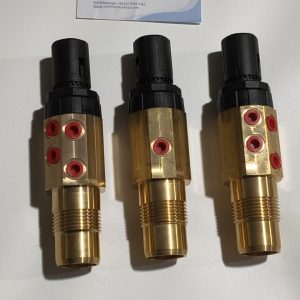
20A-Y Minimum Pressure Valve
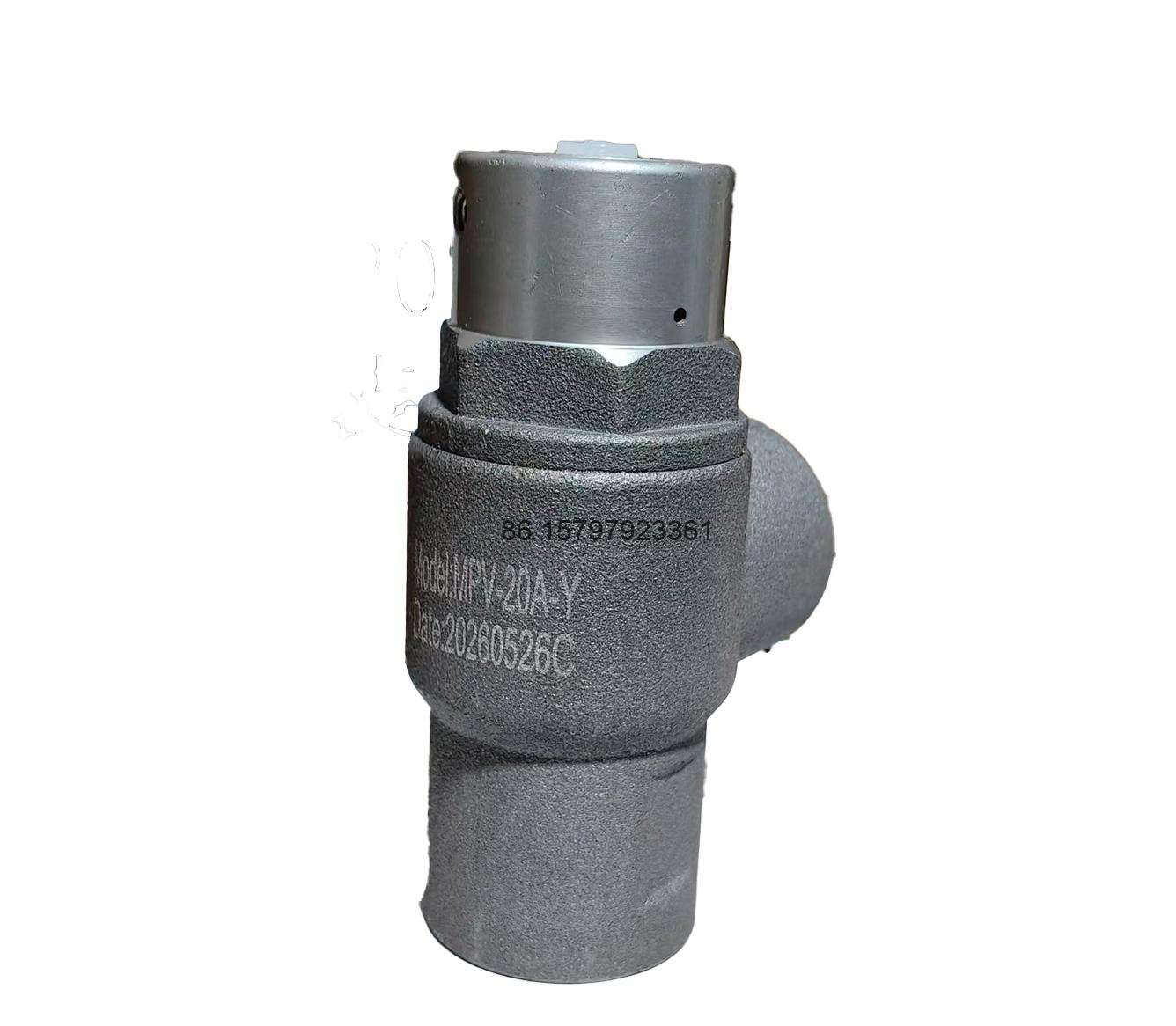
Product description:
| Item | Specification |
|---|---|
| Nominal diameter | DN20 (3/4″ / G3/4) |
| Inlet connection | G3/4 threaded (A-type) |
| Outlet connection | G3/4 threaded (A-type) |
| Opening pressure | 4 – 5 bar (0.4 – 0.5 MPa) |
| Max. working pressure | 16 bar |
| Recommended flow range | approx. 1.6 – 2.9 m³/min |
| Sealing material | FKM / PTFE |
| Suitable machine power | approx. 7.5 – 11 kW |
- Holds minimum pressure in the separator tank — the valve stays closed until the tank pressure reaches the calibrated opening value (4–5 bar). By keeping pressure inside the tank, it ensures the oil-laden compressed air is properly separated in the separator element, which directly reduces oil carryover and oil loss.
- Builds oil circulation pressure — the pressure held in the tank pushes lubricating oil through the oil circuit to the screw element and bearings, guaranteeing lubrication and cooling during start-up and low-load running. Without this pressure, the machine can overheat very quickly.
- Protects the oil separator element — by controlling the flow rate and avoiding sudden large pressure differences, the valve shields the precision separator element from pressure shock and extends its service life.
- Works as a check valve — when the compressor unloads or stops, the valve closes automatically and stops compressed air in the downstream piping from flowing back into the compressor.
Product Advantages
- DN20 (3/4″ / G3/4) A-type straight threaded connection — both inlet and outlet are G3/4 threaded for a direct screw-in installation on compressors with a threaded separator outlet; a standard, widely used connection style that is easy to install and replace during routine service.
- Matched to small-to-medium compressors (approx. 7.5–11 kW) — the DN20 size and flow range (approx. 1.6–2.9 m³/min) are correctly sized for small-to-medium oil-injected screw compressors in this power class.
- Calibrated 4–5 bar opening pressure — strengthened spring holds the separator tank at the pressure needed for proper oil separation and lubrication, with reliable opening pressure that is not easily deformed or fatigued.
- 16 bar max. working pressure — built to handle the full operating pressure range of standard oil-injected screw compressors.
- FKM / PTFE sealing elements — high-quality seals deliver sensitive check action and reliable sealing, resisting oil and high operating temperatures.
- Reduces oil carryover and oil consumption — enough holding pressure lets the separator element remove oil droplets effectively, so less oil escapes into the downstream air line and oil consumption stays within normal range.
- Guarantees lubrication and prevents overheating — the retained tank pressure drives oil to the screw element and bearings, protecting the machine from overheating and premature wear, especially at start-up and low load.
- Protects the expensive separator element — controlled opening avoids sudden pressure shocks and large pressure differences across the separator element, lengthening the service life of this precision filter.
- Prevents air backflow — acts as a dependable check valve when the compressor unloads or stops, preventing compressed air in the piping from blowing back into the machine.
- Correct -Y variant — manufactured to match the 20A-Y / MPV-20A-Y specification; if your original valve is marked 20A-Y, this is the direct replacement.
FAQ
Q1: What is a 20A-Y minimum pressure valve used for?
A: It is a pressure-control and check valve fitted at the outlet of the oil-gas separator tank on an oil-injected screw air compressor. It holds a minimum pressure inside the separator tank (so oil is properly separated and lubricating oil circulates correctly), protects the separator element from pressure shock, and prevents compressed air from flowing back when the machine unloads or stops.
Q2: What does “20A-Y” mean? Will it fit my compressor?
A: “20” = nominal diameter DN20 (3/4″ / G3/4); “A” = A-type straight threaded connection (G3/4 inlet and outlet); “-Y” = the specific variant. This valve fits oil-injected rotary screw air compressors that use a 20A-Y / MPV-20A minimum pressure valve, typically on machines in the approx. 7.5–11 kW range. Before ordering, please confirm the full model marking on your original valve and the connection type, or send us your compressor model and we will help you confirm.
Q3: What are the technical specifications?
A: For the MPV-20 / A series: nominal diameter DN20 (3/4″ / G3/4), G3/4 threaded inlet and outlet (A-type), opening pressure 4–5 bar (0.4–0.5 MPa), maximum working pressure 16 bar, recommended flow approx. 1.6–2.9 m³/min, FKM / PTFE seals, suitable for approx. 7.5–11 kW compressors. These are typical values — please confirm the exact opening pressure and thread type against your original valve or service manual.
Q4: What is the difference between 20A-Y and other 20-size valves (20J-F, 20B-F)?
A: All three are DN20 (3/4″) minimum pressure valves with the same size and similar pressure / flow ratings, but they use different connection types and body designs: 20A-Y uses the A-type straight threaded connection (G3/4 inlet and outlet), 20J-F uses the JF-type threaded connection, and 20B-F uses the B-type threaded connection. They are not always interchangeable, so you must match the exact model marking on your original valve. If you are not sure, send us a photo of the old valve.
Q5: What is the difference between 20A-Y and 20A-N?
A: Both are variants of the same 20A model, with the same DN20 A-type G3/4 threaded connection. The “-Y” and “-N” suffixes identify different production variants / specifications. You should always match the suffix marked on your original valve — if your old valve is marked 20A-Y, order the 20A-Y; if it is marked 20A-N, order that version instead.
Q6: Where is the minimum pressure valve installed?
A: It is installed at the compressed-air outlet of the oil-gas separator tank (usually on the upper part of the separator barrel), between the separator element outlet and the aftercooler / downstream piping.
Q7: What are the symptoms of a faulty minimum pressure valve?
A: Common signs include: excessive oil in the compressed air (oil carryover), higher-than-normal oil consumption, the compressor overheating due to poor oil circulation, inability to reach the rated discharge pressure, unstable or fluctuating outlet pressure, and air blowing back from the machine when it stops. Any of these can indicate the valve is stuck, the spring has weakened, or the seals have failed.
Q8: How do I check whether my minimum pressure valve is working?
A: A basic in-machine check: start the compressor and watch the separator tank pressure. The tank pressure should build up to the calibrated opening value (around 4–5 bar) before air starts flowing to the downstream line. If air flows out immediately at very low pressure, the valve is likely stuck open; if the tank pressure keeps rising but no air reaches the outlet, the valve may be stuck closed. For an accurate result, remove the valve, inspect the piston, spring and seals, and test the opening pressure on a test bench.
Q9: When should I replace it, what is included, and is installation difficult?
A: Replace it when the machine shows the symptoms above, when the valve fails the opening-pressure test, when air or oil leaks appear around the valve body, or during a major overhaul after long service hours. The 20A-Y is supplied as a complete valve assembly (valve body, piston / core, spring and seals). Installation is straightforward for service technicians familiar with the machine: release all system pressure first, clean the valve seat and threads, fit the new valve with the correct seals (use thread sealant as appropriate), then verify the opening pressure and check for air leaks. If you only need a repair kit (seals / spring) instead of the full valve, or need installation guidance, please contact us.
Get a Quote for Your Compressor Part
Looking for the right replacement part? Send us your part number, compressor model, or dimensions, and our team will help you confirm the correct product.